
Operations

El Teniente 8 Railway implements cameras to detect overheating in real time
Eight thermal cameras were installed in the 2nd Car Workshop to monitor the temperature of the bearings. This information is recorded and transmitted online and allows for the early detection of overheating that could lead to gear breakdowns, in addition to preventing the exposure of workers.


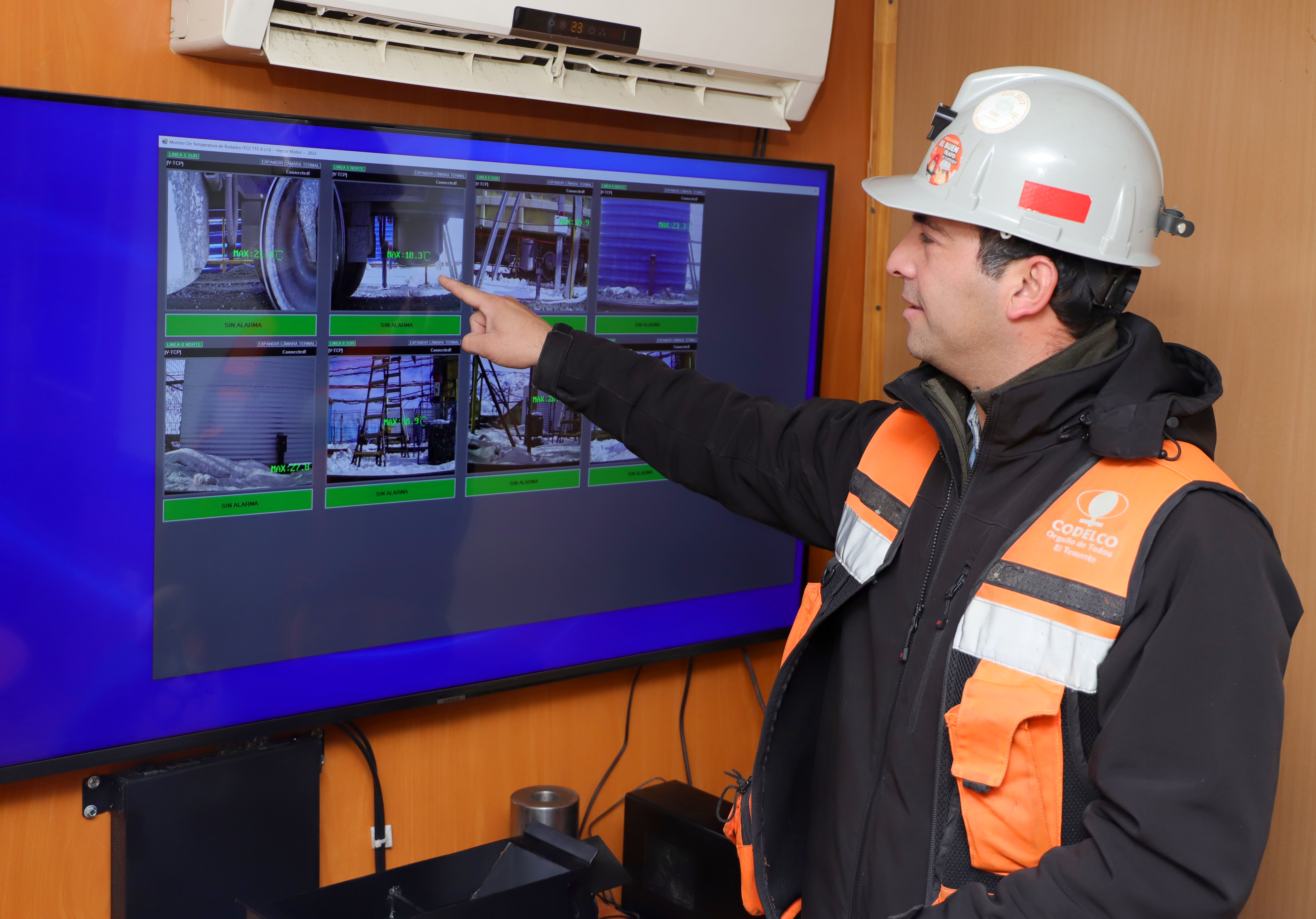
In order to make progress in matters of safety and prevent incidents, eight thermal cameras were installed in the Car Workshop 2 of the Teniente 8 Railway, which monitor the temperature of the bearings in the wheels of the cars and the locomotive in real time, which allows monitoring and acting in time in case of overheating of any of these parts.
“If a bearing melts, it can cause a derailment, which can break the track and have other consequences inside the tunnel and force production to stop,” explains Sergio Miranda, head of the Service Equipment and Carriage Maintenance area.
Francisco León, the person in charge of the field staff at the Maestranza de Carros, points out that although temperature measurement is part of the maintenance plans, it was carried out manually once a month.
“We had a spreadsheet and we kept notes. Now, with this system, we are measuring 24/7 and there is an online record that anyone connected to the network can access,” says León. “This record is very useful because depending on the bearing temperature, we can know if the train is not braking or if it is braking too much.”
Teamwork that reduces exposure
Sergio Miranda highlights that the initiative was born from a meeting that the maintenance team had to focus on preventing bearing overheating.
This is how they joined forces with the Interflow system team (traffic signaling and control system), with whom they developed this tool from the ground up: wiring, network, platforms, cameras, monitoring spaces and more.
Mechanical maintenance technician Alexis Silva was key in this development, contributing both to the installation of the infrastructure and to the configuration of the system. In addition to the teamwork between different areas and management, what the head of Maintenance at Maestranza 2, Fernando Quintana, highlights is that these cameras, when monitored remotely, allow us to “reduce the exposure of our workers”, since before, temperature measurements were done manually, at a short distance from the cars.
“Knowledge must be disseminated and this initiative does not only have a technological component, but we are also introducing improvements in the way we care for people. We were able to work together on something we created from the ground up, we are very grateful for the invitation to be part of this,” says Juan José Sánchez, head of maintenance for the Interflow system.
Tags
×