
Operations

Mural inaugurated at the Dintrans Kindergarten in Rancagua seeks to educate about regional native fauna
The work was promoted by the Cachapoal River Surveillance Board, First Section, and Codelco, El Teniente Division, and designed by the artist Alonso “Loncho” Salazar, as a way of raising awareness about environmental care, within the framework of the Environmental Water Education Program developed by the mining company.


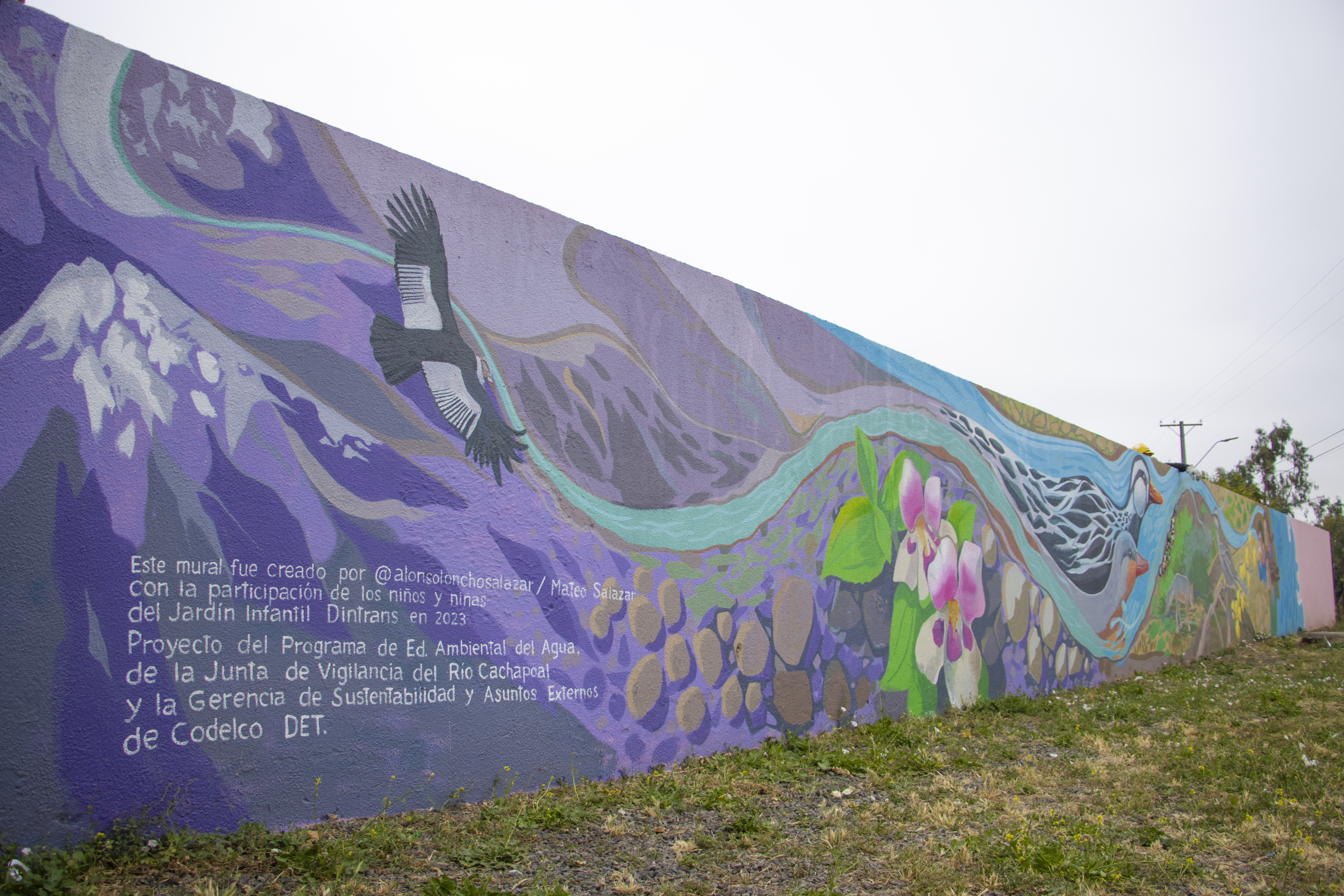
Codelco El Teniente Division and the Cachapoal River Surveillance Board, First Section and its Tributaries, inaugurated a mural on the care of the flora and fauna of the Cachapoal River basin at the Dintrans Kindergarten in Rancagua. The work, painted by local artist Alonso "Loncho" Salazar, is part of the Environmental Water Education Program, developed in the sector.
Vanessa Mancisidor, coordinator of the Surveillance Board program, explained that “it is a way of completing a cycle of work, both in the community and educational spheres. This is a way of educating the community about the value of the flora and fauna of our basin, as well as making them visible on a daily basis in the area.”
This piece joins two other murals, also focused on environmental awareness, previously developed by the copper company and the artist, located at the San Alfonso Eco School in Alhué and at the La Isla School in Doñihue.
Its author, Alonso “Loncho” Salazar, said that “when they made me this proposal, I was very interested, because I had not done any murals in Rancagua. In addition, they invited me to represent the Cachapoal River basin, an interpretation focused on nature and biodiversity, which is what motivates and interests me.”
Community participation
In the work, community participation was encouraged through a stone painting workshop, where children from the kindergarten freely created pieces that were then integrated in relief into the canvas.
The Community Development Supervisor of El Teniente, Carlos Vásquez, said that “this mural seeks to leave a mark regarding nature and environmental care in the Dintrans sector. It was designed with the participation of the community, where work was carried out for more than a year in various workshops. The mural reflects the meaning of the program and the importance of the basin in the territory.”
×