
Operations

Students from the José Manuel Balmaceda School made an educational visit to the Cauquenes Farm Nursery in El Teniente
Primary school students participated in an educational talk by the Mediterranean Ecosystems Research Centre (CEIEM), an institution focused on the research and reproduction of forest species.


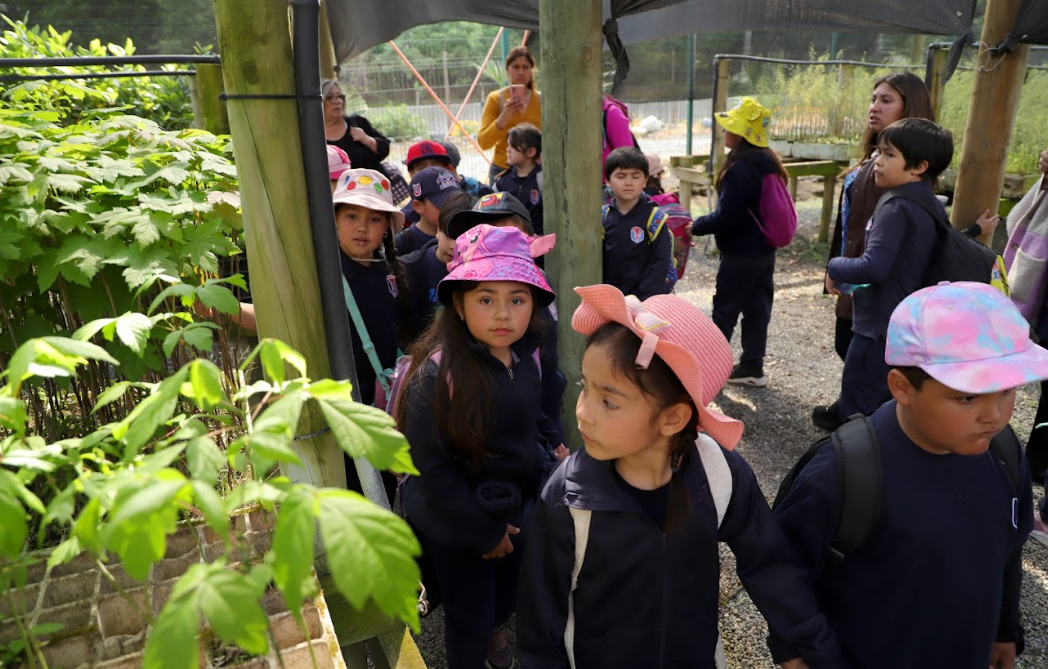
A group of 120 elementary school students from the José Manuel Balmaceda school enjoyed an educational and recreational day at Hacienda Cauquenes, as part of the program to open divisional spaces of Codelco División El Teniente. The visit focused on the history of the place and its connection with nature.
Cristián Sanhueza, Community Development Director at El Teniente, said that “the educational initiatives foster a deep connection between students and their natural environment, helping them understand the importance of conserving native species and respecting biodiversity. In addition, community participation strengthens the relationship between Codelco and the inhabitants of the region, creating a more united environment that is aware of environmental challenges and inspiring new generations to care for our natural heritage.”
Claudia Elizabeth Carvajal Tapia, a first-grade teacher, said: “I think it is a very nice experience for the children, in which they learn about the nature of their region. It is a very good opportunity for the children to interact with nature and flora.”
The activity is part of Codelco El Teniente's community visits program, which facilitates tours for community organizations and educational establishments, with the aim of strengthening the link between the community and the company.
Learning from forestry commitment
During the day, girls and boys received a talk at the Mediterranean Ecosystems Research Centre (CEIEM), the result of an agreement between the El Teniente Division and the Forestry Institute (INFOR). There, they learned about the importance of the Hacienda nursery in the production of more than 350,000 native plants annually.
Giovani Jenson, a first grade parent, said that “the experience has been very nice. They learned what a seed is, how to plant it. It is important that they learn about the process from a young age. These initiatives are excellent because there are few places that offer these opportunities.”
During the activity, students interacted with various native species that are in the conservation category, such as the lingue, the Chilean palm and the canelo, as well as cacti, ferns and other plants that require attention for their conservation. This activity seeks to help them understand the importance of preserving these species.
Génesis Fuentes, a student at the school, said that “the visit was very nice, it was a lot of fun. We saw many little plants and we are very happy to be here.”
Meanwhile, student Franco Palavecino added that “what I liked most was the opportunity to learn about plants. We learned about litre, cinnamon and hawthorn.”
Tags
×