
Operations

El Teniente and the Cachapoal River Surveillance Board promote environmental education at the Cauquenes Hacienda Nursery
This initiative is part of the Environmental Water Education Program, developed by both institutions, in the 10 de Agosto de Olivar neighborhood. This year, five theoretical and practical workshops have been held in the community.


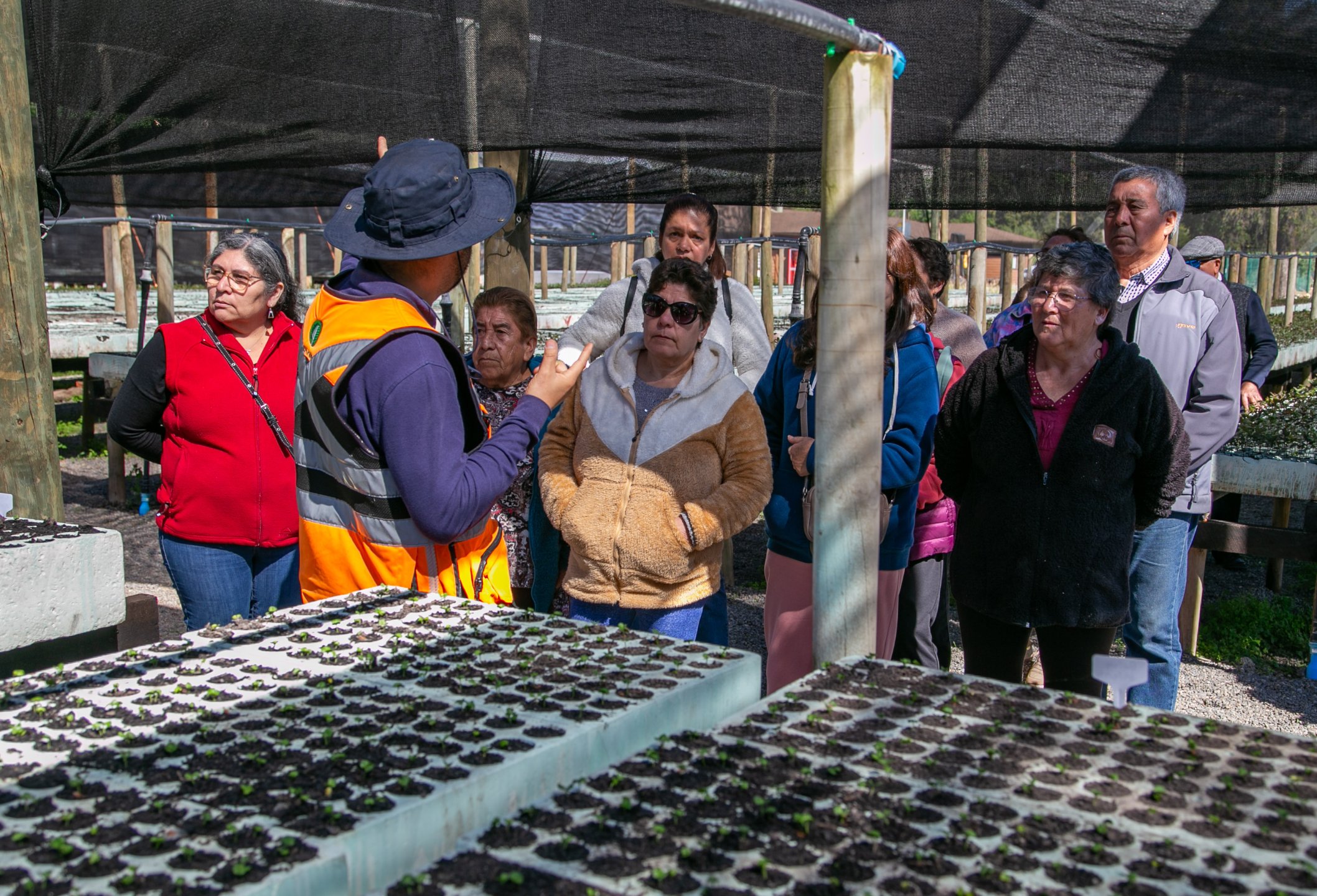
To promote environmental care, twenty residents of the 10 de Agosto Population in the Gultro sector, in the Olivar commune, participated in an educational workshop at the Hacienda Cauquenes Nursery. Within the framework of the Water Environmental Education Program, a guided visit was held at the Mediterranean Ecosystems Research Center (CEIEM), where they learned about the process of conservation of the Chilean native forest.
This activity is part of the collaboration agreement between the Surveillance Board of the Cachapoal River, First Section and its Tributaries and Codelco, El Teniente Division. To date, a series of theoretical and practical workshops have been held with residents of Gultro, seeking to raise awareness about environmental protection in the area.
El Teniente Community Development Supervisor Carlos Vásquez explained that “as a company, we are committed to environmental education because we believe that awareness about the responsible use of water is essential for the sustainable development of our community. These types of initiatives strengthen our ties with the community and contribute to the preservation of our natural resources for future generations.”
During the workshop, participants received a guided tour by agricultural engineers, who explained the germination, planting and growth process of native species. The CEIEM, created in collaboration with the Forestry Institute (INFOR), has turned the nursery into a key space for the production of native plants in danger of conservation.
Vanessa Mancisidor, coordinator of the Junta program, added that “this agreement complements the content we apply in the program. This place, where more than 300 thousand native trees grow and will be planted, is a great room where we can also learn about the close relationship between the forest and water.”
Education for responsible use
To reinforce the learning, the visitors participated in a practical workshop on substrates. With material examples, they learned about different types of substrate and their benefits for retaining moisture, which helps reduce water consumption in different plantations.
José Luis de la Fuente, sociologist and coordinator of the community line, said that “the substrates help to maintain humidity and consume less water when sowing. The objective is for them to learn techniques to apply them in their homes or greenhouses, since many have small gardens.”
Prosperina Alvarado, president of the 10 de Agosto Residents’ Association of Olivar, said: “I liked it because we saw the entire process of the plant. People don’t know much about the circular economy and, thanks to this program, we have learned a lot about plantations and water use.”
For her part, Susana Pozo, secretary of the Siempre Alegre Senior Citizens Club in Gultro, commented that “we were very interested in knowing how a nursery works. Being part of the program has been very beneficial. It is good, because as older people, we learn things that we did not know.”
In parallel, in the educational line of the program, thirty workshops have been held with the educational community of the Dintrans Kindergarten. In this framework, its educators participated in a similar visit to the Nursery of the El Teniente Division.
Tags
×