
Operations

El Teniente successfully migrates to a digital radio communications system in record time
The new technology, which leaves analogue radios behind, optimises communications on site, both for operational and safety issues. The improvements included strengthening the system, increasing the number of channels and, therefore, eliminating waiting lists for sending messages.


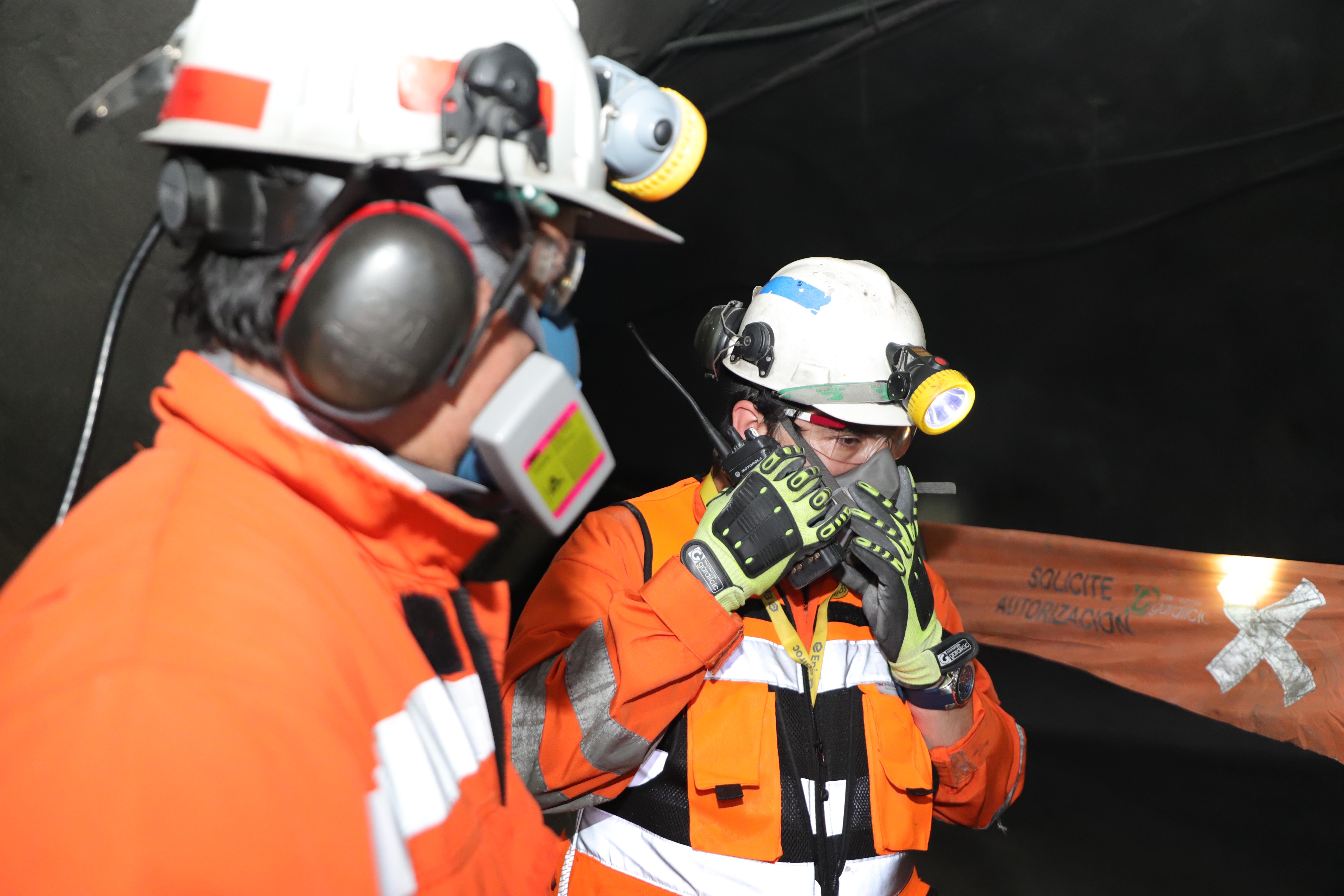
It took just one minute and twelve seconds for Codelco's Technological Operations Management, in coordination with various El Teniente Division managements, to migrate the node that articulates radio communications in the field from an analog system to a digital one.
That action, carried out on January 24, was the result of years of work and preparation that had as its main objective to achieve the transfer with the least possible interference to operations in El Teniente.
“Mining radios guarantee secure communication in demanding work environments. They are crucial for coordination within the mine, in the transit of heavy and light vehicles and with workers in the field,” explains Sebastián Vergara, director of Technological Operations for Codelco’s Southern District.
“We had planned to spend three to five minutes, based on our previous experience in the Chuquicamata Division. But thanks to that experience and taking certain steps forward, we reached the 12-minute mark, to minimize the impact on the operation's communications as much as possible,” he says.
High standard system
El Teniente's Operational Continuity leader, Julio Vergara, says that this transfer is part of Codelco's strategic plan to implement digital technology in radio communications in all divisions of the corporation.
In the case of El Teniente, in 2000 the Canelo Site was installed on the hill of the same name, which supported the 250 analog radios that operated in the division, which in 2018 were expanded to two thousand and the digital system was introduced, also with two thousand units, which made both systems coexist until the transfer in January.
This also involved an expansion of the capacity of the Canelo Site, to support the increase in traffic in communications and the more than 7 thousand radios that the current system has.
“The benefits of this migration to digital have to do with having 100% factory support —which in the analog case had become obsolete—, having a greater number of channels and also more capacity for channel recording,” Vergara specifies.
Jorge Viñuela, Corporate Manager of Technological Operations, adds that “this factory support allows that, in the event of any failure or problem in the radio communications network, 24 hours a day, seven days a week, an immediate change in the equipment is triggered, as well as constant monitoring that warns us of possible failures or problems that may exist.”
The improvements also eliminated the queues that were generated during peak operating hours, providing greater fluidity in communications, both for operations and for traffic control and security matters.
But in addition to providing a contribution in matters of coordination for events such as incidents and emergencies, these digital devices are also safer for operations.
“All radios are monitored and cannot be tapped. Each one has an identification number and, in case of loss, we can remove them from the system,” says Julio Vergara.
More security and certainty
Coordinating movements of heavy machinery, light vehicles, buses transporting workers, giving emergency notices and even something as simple as locating someone inside the mine, everything is done by radio in El Teniente.
“This technology gives us greater security and certainty that communications in the mine are much more stable and reliable. This gives us the guarantee to react in the best way and make the best production decisions,” says Rodrigo Andrades, manager of the El Teniente Division Mine.
“When there are restricted channels, many people talk about different topics through the same channel. With this opening and expansion, there is less interference and communications are more effective,” he notes.
Tags
×