
Operations

El Teniente introduces improvements in metal scrap compaction processes
The objective, which introduces new requirements for ferrous material recycling contracts, seeks to meet the Corporation's 2030 sustainability commitments.


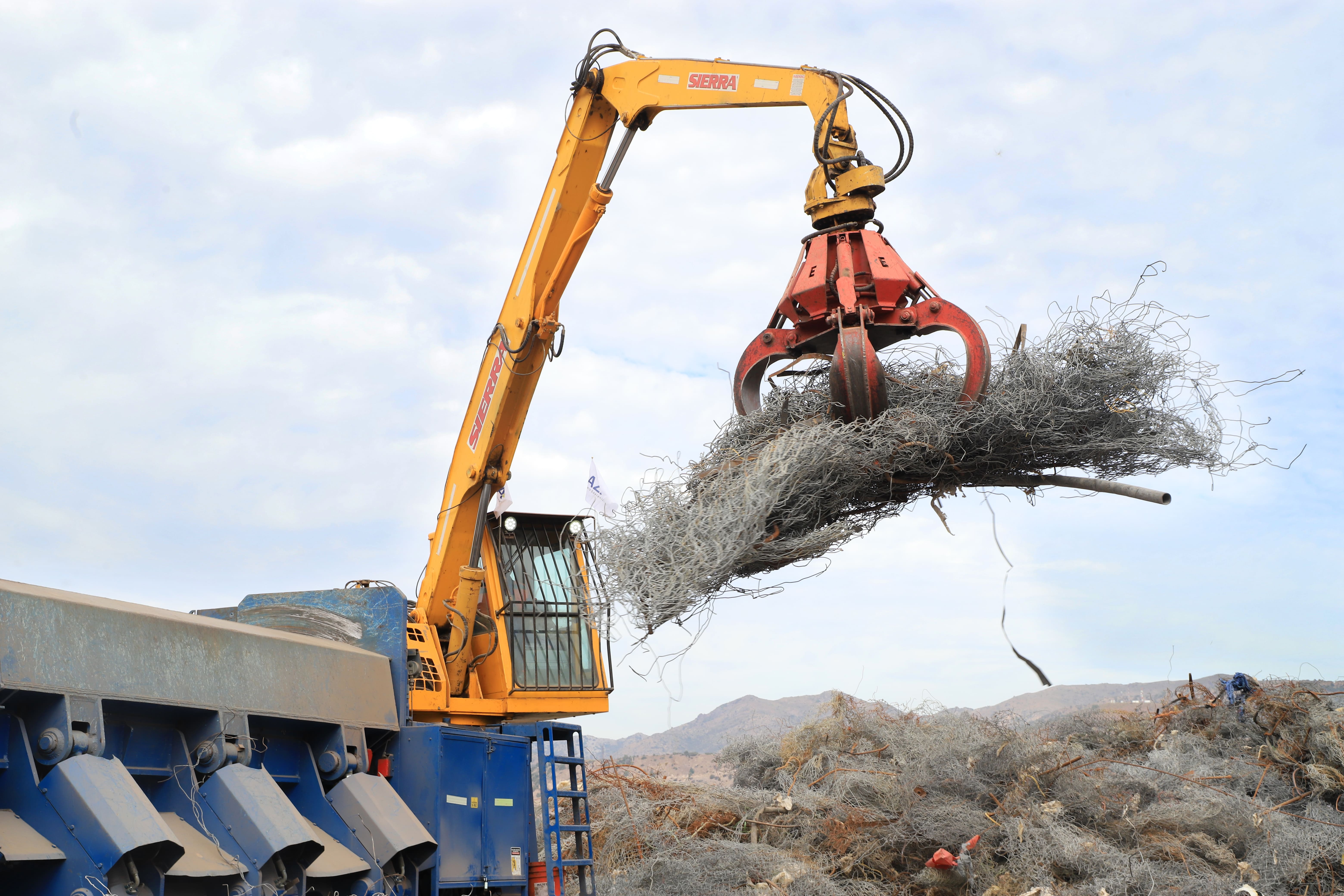
Two thousand tons of mesh for mining fortification converted into ferrous scrap have been removed during the first quarter of the year from the different mines of El Teniente, as part of the recycling and circular economy plan implemented in the Division.
The plan is part of the ongoing improvements to a contract signed with the company AZA, which allows the material to be compacted before being loaded onto trucks to transport it to the Industrial Waste Management Center (CMRIS), reducing travel times and emissions, thus contributing to the sustainability commitments signed by the copper company by 2030.
The reinforcement meshes used in the underground mine tunnels, which are large in volume and light in weight, are compacted in a hydraulic press that transforms them into briquettes. “It is a fairly quick process, lasting one minute and 20 seconds per briquette,” explains Albert Olave, operator of the mobile press.
For Katherine Mujica, CMRIS Operations Manager, “this change contributes, above all, to the logistics process, since removing the high-volume meshes in trucks meant transporting scrap with a lot of space in between, which was ultimately air. In addition, it optimizes the smelting process at the AZA plant.”
Commitment to sustainability
The head of the Circular Economy Unit of Codelco El Teniente Division, Eric San Martín, says that this improvement comes to leverage one of the goals that Codelco committed to in terms of sustainability by 2030.
“By that date, we have to achieve 65% recovery. We were already at around 38% and with this initiative we could increase this to 45% this year. In addition, by reducing the volume and increasing the weight moved, we make the transfer more efficient and reduce the carbon footprint.”
The Head of Operations of the same Unit, Felipe Núñez, complements the point: “With this alliance that we formed with AZA, we avoid the extraction of new iron, since this scrap is transformed into raw material that returns to the Division, being a net circular economy. So we reduce transportation costs, we reduce emissions and we have safer operations, which reflects the triple value that is in the divisional strategy, with a focus on the economic, environmental and social aspects.”
Tags
×