
Operations

El Teniente promotes a new edition of the Environmental Water Education Program
This year, the initiative, which is promoted jointly by the Division and the Surveillance Board of the Cachapoal River, First Section and its Tributaries, will be developed with residents of Olivar and in the kindergarten of the Dintrans Population of Rancagua.


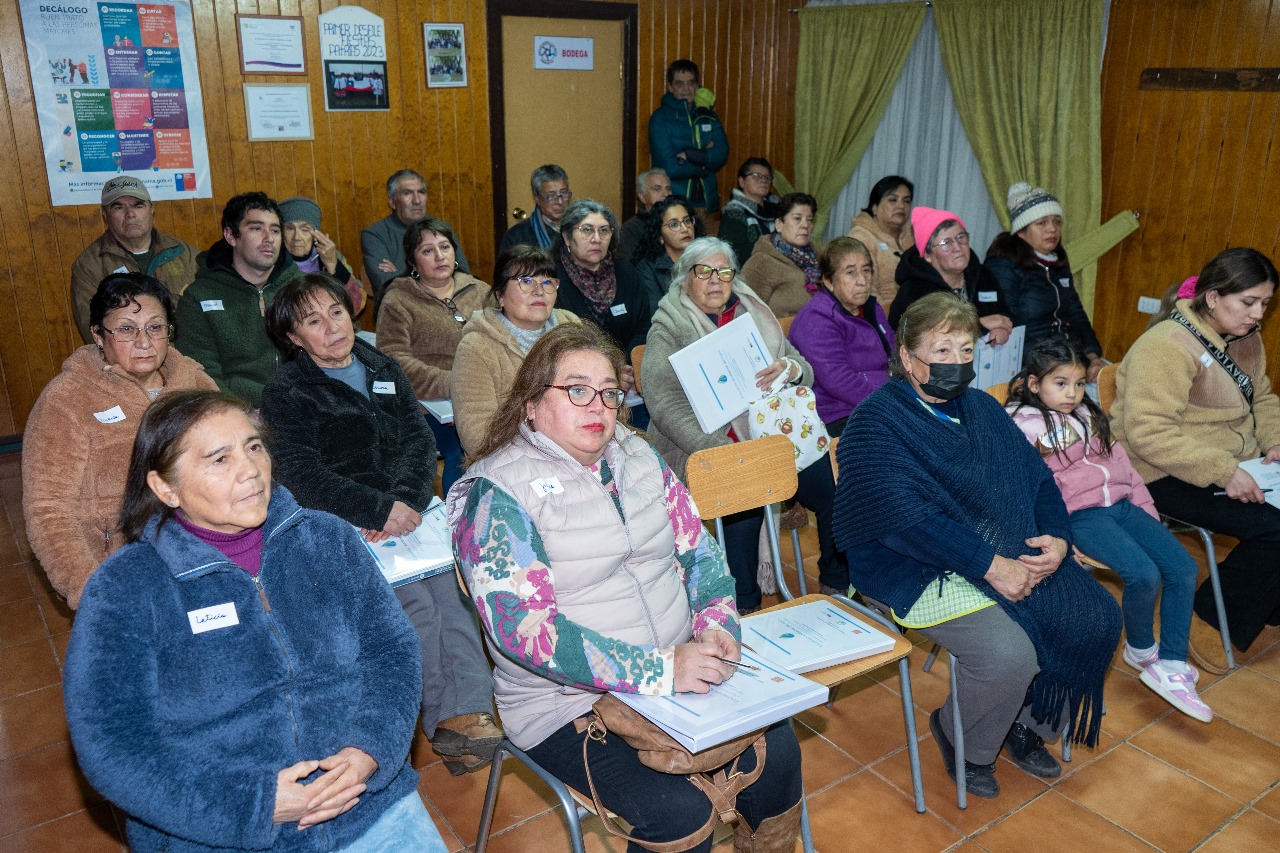
The launch of the “2024 Environmental Water Education Program” was held in the 10 de Agosto neighborhood of Olivar. The initiative, which is part of the collaboration agreement between the Surveillance Board of the Cachapoal River, First Section and its Tributaries and the Sustainability and External Affairs Management of Codelco, El Teniente Division, seeks to raise awareness about the problem of water scarcity in the region, through a series of educational workshops.
Cristián Sanhueza, Community Development Director of El Teniente, explained that “we are pleased with the continuity of this program now in the commune of Olivar because it fosters a culture of sustainability and generates environmental value. We believe that, by working together, we will build a more sustainable future for all.”
This year, the program will be developed in two communities. In the community line, residents of Olivar will participate in six theoretical-practical workshops. In the educational axis, work will continue in the Dintrans Population of Rancagua, together with the sector's Kindergarten.
Vanessa Mancisidor, coordinator of the initiative, explained that "we have expanded the program in the Olivar sector, but we will also continue to advance in the Dintrans population, particularly in the work with the kindergarten. We have several surprises, since we will work with other professionals, thanks to agreements established by Codelco. We are very happy to continue strengthening the theme of water."
Promote good practices
Felipe Sanhueza, a sociologist from the Environmental Education program, explained that “we are going to carry out activities that provide tools in the areas of the environment and domestic use of water. The main idea is to raise awareness among the population and the territory, as well as to generate good practices in the use of water through everyday actions.”
The first workshop highlighted that the content was defined by surveys carried out last year, which identified the main environmental problems and beneficial household practices in the sector.
Prosperina Alvarado Ríos, president of the Residents' Association of the 10 de Agosto neighborhood, said that "what we learn will help us with water recycling. I am glad that the neighbors have learned this because we do not have the facility to have people come to teach us things like this from other places."
Resident María Inés Almazán explained that “I am a recycler and I am also interested in the issue of water. This is going to help us a lot. It is good to know what can be done and it will help the sector.”
For five years, the Water Environmental Education Program has been implemented in various localities such as Coya, Chacayes, Rancagua and Olivar. Through active collaboration, more than 100 workshops have been held, benefiting more than 1,600 people.
×