
Operations

El Teniente Division recycles and recovers 55% of its non-hazardous industrial waste
As part of Codelco's sustainability commitments for 2030, the Division exceeded the 48% target set for 2024.


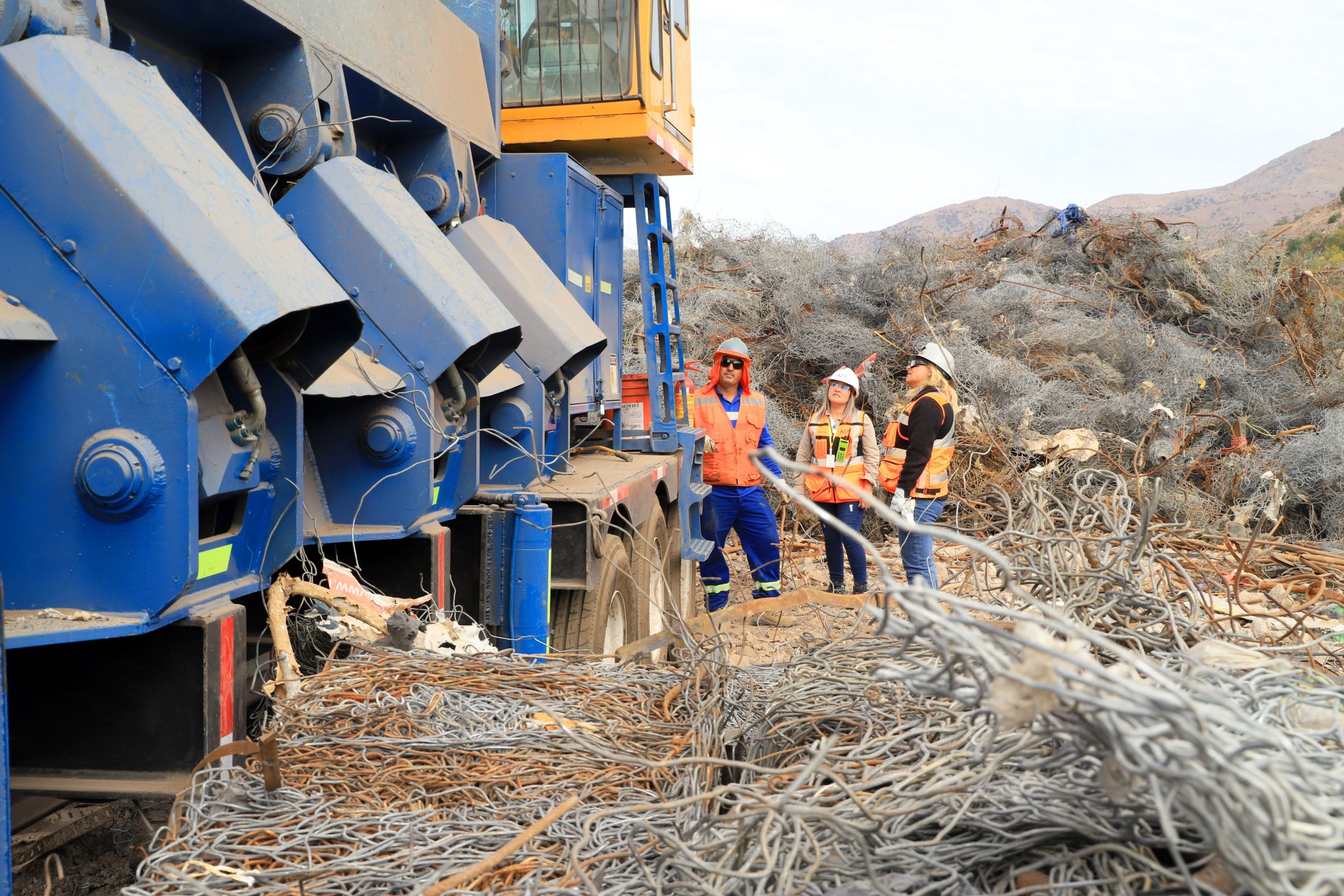
In a milestone for sustainability, Codelco El Teniente Division recovered more than 20,000 tons of non-hazardous industrial waste. This figure includes more than 1,000 tons of wood, 18,000 tons of steel, 100 tons of rubble, 140 tons of copper and 1,634 tons of used tires, including 100 tons collected in regional campaigns with municipalities.
According to figures from its Circular Economy Unit, the copper company achieved a waste recovery rate of over 55%, above the annual target of 48%. With this, it is approaching the corporate goal of exceeding 65% by 2030.
Leonardo Argandoña, Director of Territory and Circular Economy, said that “we are closing 2024 with great satisfaction for meeting the goals we set, although new challenges have also arisen for this year that is beginning. In particular, we are very pleased with the progress in waste recovery, one of the corporation's priority goals established a few years ago.”
“We achieved this result thanks to the valorisation of materials such as steel, rubber, scrap metal, copper (from out-of-service cables), rubber, wood, used tyres, paper and cardboard. The valorisation of all these elements allowed us to achieve this over-fulfilment, and this is something that makes us satisfied,” he added.
New management model
In March 2024, the El Teniente Division began operations under the new contract with the company Ambipar as operator of the Waste Management Center (CMRIS), structured in three modules: operations and collection of organic waste, waste recovery, and debris recovery.
Felipe Núñez, acting head of the Circular Economy Unit, said that “2024 was a relevant year for our management as a unit. We had the largest scrap sales contract in the Division with the steel company AZA, a contract for 21,000 tons, which managed to secure a favorable deal for both parties,” he explained.
The Division also recovered more than 1,600 tons of End-of-Life Tires (ENDT) together with the company Arrigoni in San Francisco de Mostazal. This is in addition to a series of collaborative campaigns, which allowed 100 tons to be collected in municipalities in the province of Cachapoal.
In the coming months, the main challenge of the Circular Economy Unit will be to improve the segregation of waste at source, by involving workers and collaborators in this key task to maximize and optimize the material recovery process.
×