
Operations

El Teniente Division successfully tests first structure made with bricks from tailings sand
This is a planter installed in the gardens of the El Teniente Stadium with bricks made with 85% sand from the Barahona reservoir. It has more resistant characteristics than a princess-type artisanal brick and does not represent any risk of toxicity. The next stage is to begin the tests and studies, in accordance with the regulations, that allow these elements to be used in the construction of walls and buildings.


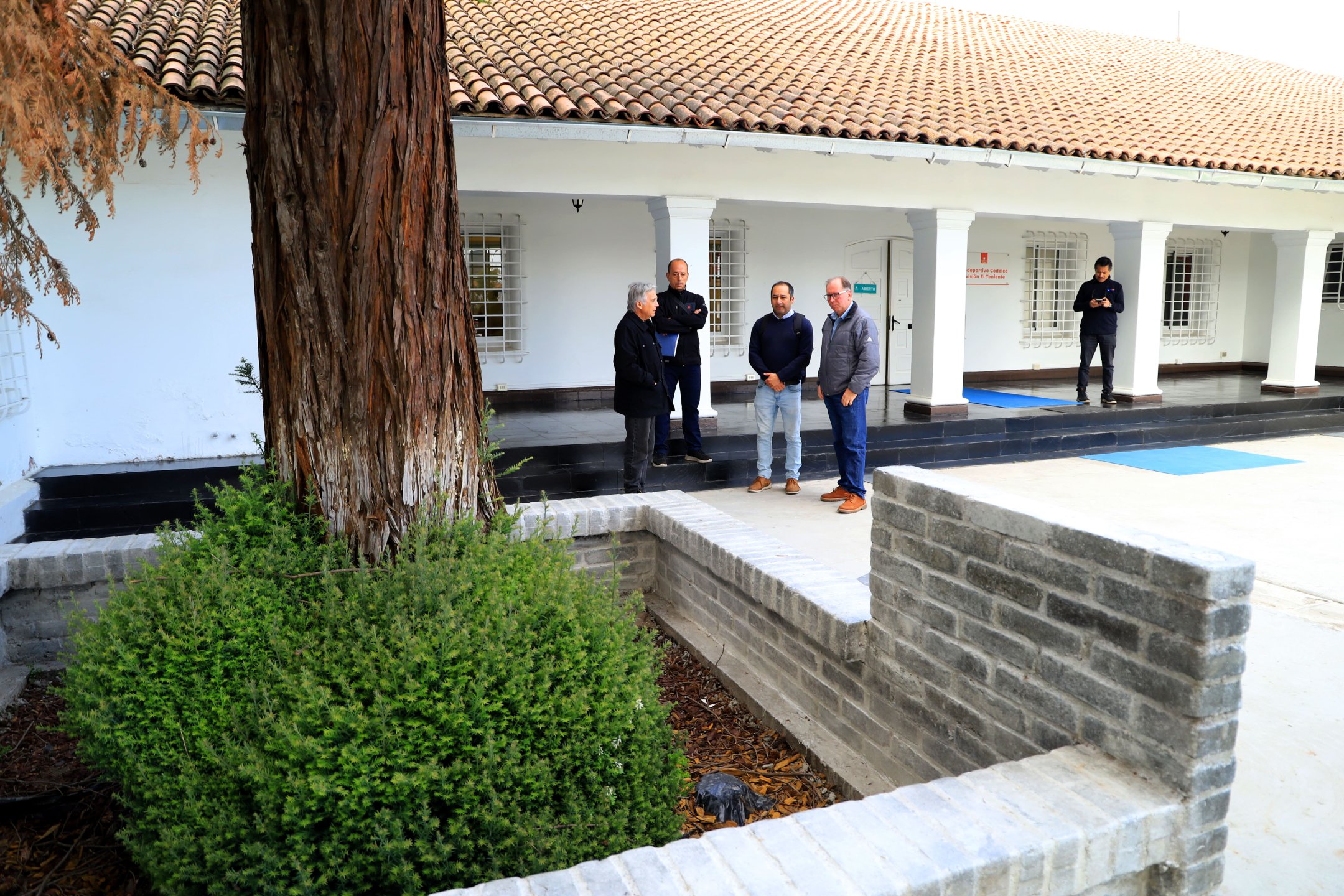
It took nearly three years of development, which finally resulted in an unprecedented structure installed at the El Teniente Stadium: a planter built with bricks made from tailings sand from the Barahona dam, owned by Codelco División El Teniente.
“This project, called Ecoladrillos, consisted of manufacturing them in compliance with Chilean regulations regarding resistance. They are non-toxic and are made with 85% tailings sand, as well as recycled tires,” explains Víctor Dörner, Innovation consultant in charge of the R&D area of the Innovation Directorate of the El Teniente Division.
“We chose the shape of the princess brick so that we could compare it with the regulations, and it more than meets the requirements: it is more resistant than a princess-type artisan brick, it does not contain any toxic characteristics, it is waterproof, lighter in terms of maneuverability, more flexible and even more resistant to impacts,” adds Dörner.
Marcelo Cubillos, Sustainability Innovation Engineer from the Innovation Department of Codelco El Teniente Division, highlighted the importance of seeing these applications materialized with materials that consider tailings in their composition and that start with studies at universities or material certification institutions.
Along these lines, the professional suggests that they will continue working with different units of the Division, such as the management of Dams, Tailings and Water Resources, and Sustainability and External Affairs, in the search for other applications, "as we already did with concrete and shotcrete (projected concrete) with tailings sand."
Large scale implementation
The mining company is already looking to the future, with the contribution that these eco-bricks can make when used in other structures.
“We are preparing the final report and we believe that, once the manufacturing process is scaled up, they may even be cheaper than traditional bricks, due to the construction material and because they do not require such high temperatures or many minutes in the oven,” says Dörner.
“Although we have now made this planter, which is somewhat more ornamental, our goal is to expand to make other constructions, which require another battery of tests to comply with construction regulations, whether with roofs, walls, buildings or even other formats such as New Jersey barriers. We want to move towards this, in order to leave this as a contribution to society,” says the engineer.
Circular economy
The acting director of Environment at Codelco El Teniente Division, Eric San Martín, stated that “the greatest impact is this break that it means in terms of science and innovation, because bricks are basically made from clay, which is a natural resource that is increasingly scarce in nature. However, tailings and used tires are abundant in mining processes and by giving them a use, we are creating a circular economy, we generate environmental value.”
×