
Operations

UNESCO Regional Director and Undersecretary for Cultural Heritage visited Sewell and inaugurated an exhibition on the former mining camp
In addition to learning about the characteristics of the mining camp, declared a World Heritage Site in 2006, the authorities visited the Casa de la Cultura in Rancagua for the opening of the exhibition of 64 paintings by artists from Lea Kleiner's workshop inspired by the City of Stairs.


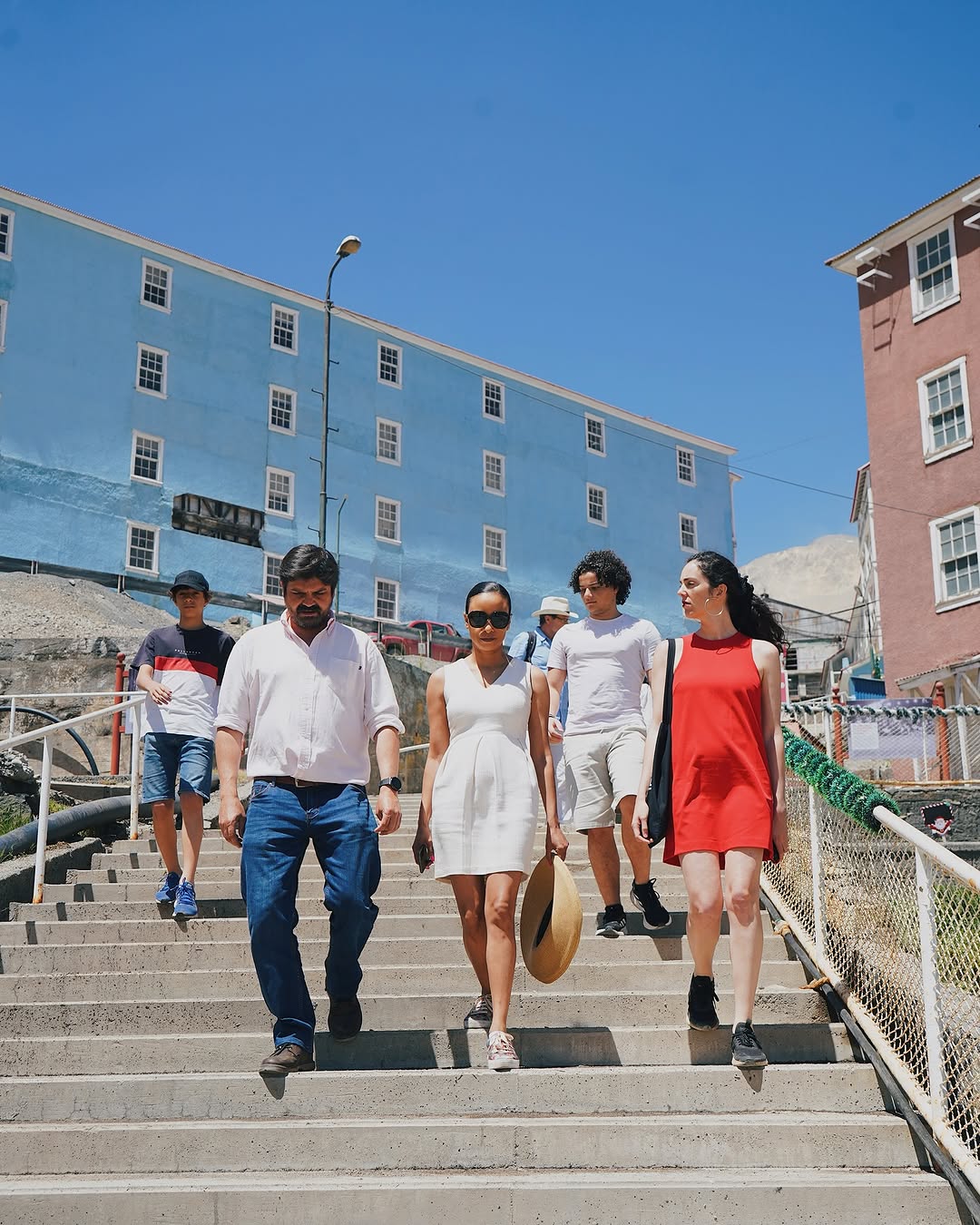
The Director of the UNESCO (United Nations Educational, Scientific and Cultural Organization) Regional Office for Latin America and the Caribbean, Esther Kuisch, and the Undersecretary for Cultural Heritage, Carolina Pérez, visited the Sewell mining camp and then led the inauguration of “Sewell, our view,” a collective exhibition of artist Lea Kleiner’s watercolor workshop held at the Casa de la Cultura in Rancagua.
UNESCO declared Sewell a World Heritage Site in July 2006, highlighting it as an example of early 20th-century industrial towns. Esther Kuisch commented that the camp “is a testament to the human capacity to adapt, to dialogue and to build community in such a remote place and that is why it is a world heritage site. I would like to thank the Sewell Foundation for the work they are doing to safeguard the site, to protect it, to promote it.”
The Undersecretary of Cultural Heritage, Carolina Pérez, recalled that “in its heyday, Sewell housed more than 15,000 people and offered advanced infrastructure for its time. With the Chileanization of copper in 1967, the transfer of its inhabitants to Rancagua began, marking the beginning of its depopulation. Today, recognized as a World Heritage Site by UNESCO, Sewell remains an exceptional testimony to the industrial cities of the 20th century.
The teacher of the watercolor workshop, Ximena García, detailed the creative process that was carried out to generate the 64 works that made up the exhibition. “We worked for a year, we came to visit Sewell, we soaked up its history, its people. And the result can be seen here. It is an excellent pictorial exhibition. Lea Klein’s workshop has been working since 2013 with the heritage we have in Chile. And one of the heritages is Sewell. Work had already been done in the saltpeter mines, Valparaíso and the churches of Chiloé.”
The exhibition will be open at the Casa de la Cultura de Rancagua until January 13, 2025, from 9 a.m. to 2 p.m. and from 3 p.m. to 6 p.m.
×