
Operations

El Teniente Division advances in reducing carbon footprint
In addition to the recent agreement to supply grinding balls manufactured from recycled material, the mining company is adding its initiatives in electromobility, the implementation of cleaner and more efficient technologies, the use of renewable energy sources and the optimization of its processes.


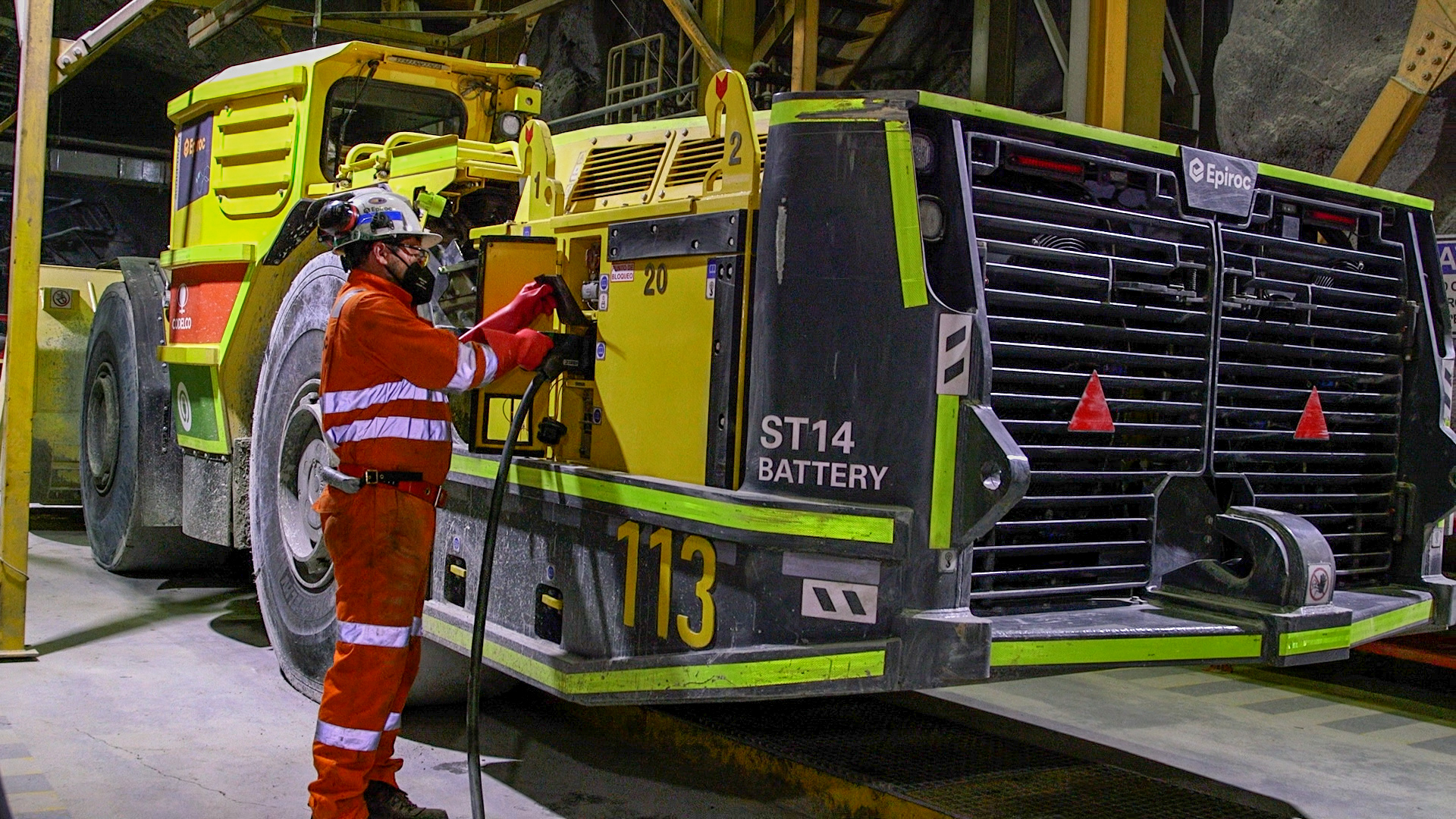
To continue advancing towards reducing greenhouse gas emissions by 70%, Codelco El Teniente Division is adding initiatives that lead it towards fulfilling the Corporation's sustainable development commitments by 2030.
Thanks to a contract with the company Magotteaux Andino SA for the supply of grinding balls manufactured from recycled material, El Teniente will reduce its carbon footprint by 40,000 tons of CO₂ annually, the equivalent of the emissions of approximately 8,464 vehicles driven in one year or 36,398 trees absorbing carbon annually.
The Director (I) of the Environment Division of El Teniente, Eric San Martín, highlighted the importance of this process. “This is very important because we recover waste that was previously scrap and returns it to the process in the form of grinding balls, closing the recovery cycle. By 2030, we have a goal that 65% of our waste must be recovered, and with the tonnage we are using here with Magotteaux, it will allow us to move towards that goal.”
Currently, the mining industry requires a large amount of energy, which is directly related to greenhouse gas (GHG) emissions. While this represents a great challenge, it also represents an opportunity to implement different mechanisms that allow the reduction of the corporate carbon footprint, such as implementing new, cleaner and more efficient technologies, using renewable energy sources and optimizing processes.
Codelco CEO Rubén Alvarado explained that “we want to be a benchmark in the implementation of large-scale supply contracts with a sustainable focus. We have to work collaboratively to achieve our goals and make our purpose of being a pillar of sustainable development for Chile and the world a reality,” he said.
The contribution of electromobility
With the transition towards electric fleets in the transport of workers, which seeks to reach 40% by 2030 and 100% by 2040, one of the most advanced aspects on that path is the electromobility plan in operations,
Currently, there are more than one hundred buses in El Teniente that take workers from the surface to the interior of the mine. In addition, there are another five buses that transport people from the upper area to Rancagua.
The entire fleet allowed a reduction of 2,800 tons of CO2 emissions per year and a saving of 1,100,000 liters of fuel per year.
The division also made progress in 2023 in testing the first 100% electric LHD in South America and this year it is expected to see the performance on the ground of the first electric and semi-autonomous LHD that was imported in January 2025 from Finland; and tests are being carried out with an electric pickup truck designed especially for mining operations.
Quantification stamp
In October last year, El Teniente also obtained the emissions quantification seal from the Huella Chile program of the Ministry of the Environment (MMA). The division was recognized for measuring the emissions linked to its products, using the carbon footprint calculator for mining suppliers developed jointly by Codelco, the ministry and Corporación Alta Ley.
To do this, it quantified the carbon footprint of its sulfuric acid using data from the Caletones Smelter. The result of the calculation was 54 kilograms of CO2 per ton of acid, which represents a 56% reduction compared to other traditional methods. This was significant, since it was verified that the El Teniente Division produces a byproduct with a low carbon footprint, which is used as a key input in the leaching process of other divisions.
Progress has also been made in agreements with energy suppliers to ensure that a significant percentage of the energy used comes from renewable sources; in the implementation of energy efficiency programs to reduce energy consumption in its production processes; and in waste management through recycling and reuse programs for materials to reduce the amount of waste generated and generate circular economy initiatives.
Tags
×