
Operations

Codelco generates Ebitda of US$ 2,896 million in the first half of 2024, 63% more than in the same period of 2023
The copper producer also posted higher profits. Additionally, it recorded lower unit costs, despite lower production and lower by-product prices. The company expects copper production to increase between July and December.


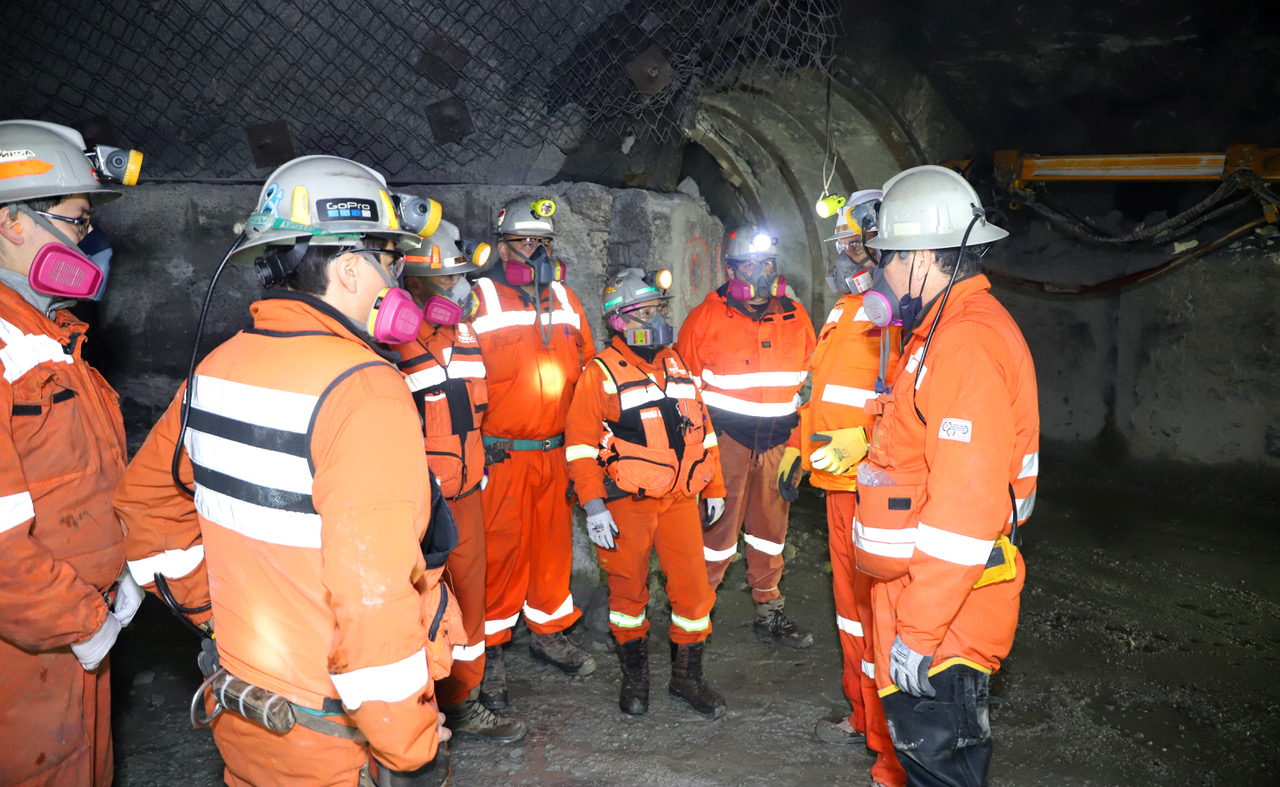
State-owned Codelco generated US$2.896 billion in EBITDA (earnings before interest, taxes, depreciation and amortization) during the first six months of 2024, 63% more than in the same period of 2023, when the figure reached US$1.775 billion. The increase of US$1.121 billion is mainly due to the higher price of copper, lower operating costs, the variation in the exchange rate, the results of the subsidiaries and the better conditions of minerals from third parties. As of June 30, 2024, the copper company generated a gross profit of US$2.079 billion, US$555 million (36%) higher than the previous year, when it totaled US$1.524 billion. This figure is explained, in part, by higher revenues from the sale of own copper by US$ 261 million, the reduction in the costs of selling own copper by US$ 361 million, and despite a reduction of US$ 124 million in gross profit from the sale of molybdenum, by-products and services. Meanwhile, Codelco's consolidated profit for the first half of the year reached US$ 282 million, which, compared to US$ -140 million in the same period of the previous year, reflects an increase of 301%. Despite the company's better financial results in this semester, contributions to the State reached US$ 655 million, a decrease of 15%, which is mainly explained by a lower payment for the Reserved Copper Law, given the lower sales of copper and molybdenum in the calculation period for that tax, which includes December 2023 (until May 2024). However, the company maintains its projection of increasing its contributions to the Treasury this year compared to the previous year. Own production reached 579,785 tons, 8.4% less than during the first half of the previous year; meanwhile, total production (which includes Codelco's participation in Anglo American Sur and El Abra) reached 628 thousand tons, 8.2% less than in 2023. The drop was partially offset by management efforts in all operations and intensive monitoring of the production plans implemented this year. This allowed, for example, a 22% greater operational continuity of the Andina concentration plant, which positively impacted the amount of mineral treated, going from 66 thousand tons per day (ktpd) during the first six months of 2023 to 80 ktpd in 2024; a 15% higher contribution from the Chuquicamata Division underground mine, which reached 53 ktpd (compared to 46 ktpd in the same period of the previous year), added to the improved mineral grade of 6% in the Gabriela Mistral Division. “We want to recover the capacity to meet our goals in a timely and efficient manner, and these good financial results encourage us to maintain our efforts. We have strengthened our plans for intensive monitoring of operations and critical support to meet our production goals. With these plans in operations, we are working so that, starting in this second half of the year, production begins its long-term growth rate, progressively increasing to reach the level of 1.7 million tons by 2030,” said the CEO, Rubén Alvarado. In fact, from the Teniente Project Portfolio, Andesita, with an execution of 49.5%, projects the start of its production for October. Andes Norte, meanwhile, with 75% progress with respect to the reformulated project program, contemplates the start of production in December 2024. Rajo Inca, with 82.5% total progress, continues the works of the concentrator and hydrometallurgical plants, in addition to the improvements in Pampa Austral. The start of the ramp up of the concentrator is estimated for September. The first phase of the infrastructure of level 1 of Chuquicamata Underground reached 61.6% progress. Meanwhile, Traspaso Andina continues the ramp up of the second crushing line that began in April 2024. The desalination plant for the Northern Operations, which is being built in Caleta Viuda, south of Tocopilla, has a physical progress of 44.1%, in line with what was scheduled, so its entry into operation is maintained for the first quarter of 2026. Lower direct and net cathode costs Codelco had lower costs than in the first half of 2023: the direct cost (C1) decreased from 212.7 to 203.5 cents per pound (c/lb), which represents a drop of 4.3%; meanwhile, the net cathode cost (C3) fell from 360 to 334 c/lb, with a reduction of 7.2%. The reasons behind this decrease in costs were the favorable effect of the exchange rate; Lower input prices, especially electricity and fuel, in addition to the favorable impact on the cost of a lower use of inventories of products in process. For the C3 cost, in addition to what has already been mentioned, the variation in liabilities in pesos, positively impacted by the exchange rate, had an influence. Milestones of the second quarter (April 1 to June 30) In April, the construction of Traspaso Andina was completed, with the start of the ramp up of the second crushing line, which will extend the useful life of said division by 30 years. With the presence of the Minister of Finance, Mario Marcel, and the Minister of Mining, Aurora Williams, the Shareholders' Meeting of the state-owned company was held, which was broadcast publicly for the second consecutive year. At the beginning of May, the copper company secured 100% renewable energy supply by 2030, after the modification of a contract signed with Engie. Also in May, Codelco concluded the successful Transition Plan for 350 workers following the closure of the Ventanas Smelter. At the end of May, Codelco signed an agreement for a partnership with SQM, which gives Chile leadership in the global lithium market. In June, the Salvador Division inaugurated smart bus stops and converted 100% of its passenger transport fleet to electric buses. The same month, the National Monuments Council approved the declaration of the former Potrerillos camp as a typical zone. During the period, Codelco reached collective bargaining agreements with the Workers' Union and the Plant-Administration Establishment Union of DRT; the Head Office Workers' Union; Union No. 6 and Union No. 2 Potrerillos, of Salvador; and the Unified Workers' Union (SUT), Industrial Labor Integration Union (SIIL) and Union Plants (Suplant), in Andina. After hiring the Rothschild investment bank to search for a partner in the lithium project for the Salar de Maricunga, more than 50 companies from around the world were invited. Half of them have already signed confidentiality agreements. Chuquicamata Subterránea concluded the semester with a 35% female workforce in the operations area, positions traditionally occupied by men. Reasons for lower production compared to 2023 The drop in production is mainly due to the operational stoppage of Radomiro Tomic, after the unfortunate fatal accident of Ana Camila Rojas Farías (RIP) in March, which forced the trucks to be stopped, which only returned to normal operation in June. The lower contributions from the El Teniente underground mine also had an impact, after the rock explosion in 2023; and from the Ministro Hales open pit mine, derived from the use of stock, which translates into a lower ore grade; the climatic events of May and June in the central-southern area, which limited operational conditions, and the delay in the entry into operation of the Inca Pit, which will provide continuity to the Salvador Division.
Tags
×