
Operations

Firefighters from El Teniente and collaborating companies receive training from firefighters in the safe management of hazardous substances
The training focused on the safe handling of emergencies related to sulfuric acid and was attended by emergency brigades from El Teniente, collaborating companies and the Rancagua Fire Department.


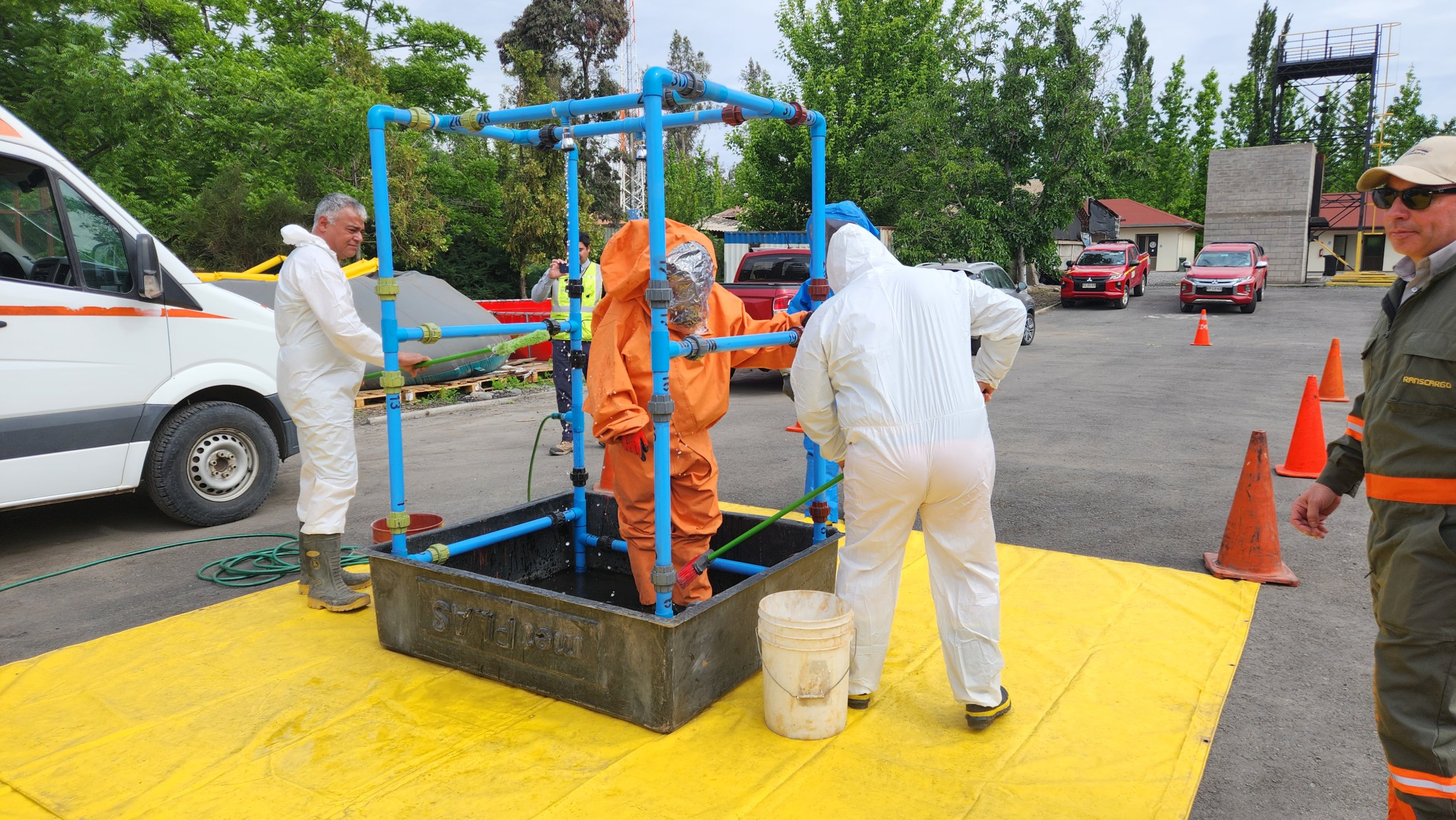
Various actors involved in the transportation of hazardous substances participated in the training of the Emergency Network for the Sulfuric Acid Chain (Red ECAS) 2024 version 3. The training lasted 8 hours and was held at the Rancagua Fire Department Training Center, where emergency brigades, workers and collaborators of El Teniente updated their knowledge on the safe handling of these elements.
Patricio Plaza, from the company OCA Chile and coordinator of the ECAS Network in the El Teniente Division, explained that one of the functions of the Network is “to keep personnel trained, prepared and ready to face emergency situations that may arise in transportation between Caletones and El Puerto de San Antonio.”
He also said that they maintain "a permanent work, not only with the Rancagua Fire Department, but also with Senapred and other fire departments along the route, to maintain communication so that when emergency situations arise, we work in a more effective and efficient manner."
During the day, the brigade members participated in both theoretical and practical sessions, in which they reviewed the classification of hazardous substances, current legislation and the physical-chemical properties of the substances. In addition, they addressed the process of decontamination of personnel and containment operations, which were put into practice in the second part of the course in which emergency simulations of both processes were carried out to ensure safety against possible events involving sulfuric acid.
Rodrigo Mardones, Head of Operations of the Commercial Products Transportation Unit of the Services and Supplies Management (GSYS) of El Teniente, explained that “normally we are training all the people who have and are involved in this transportation. It is a constant learning process, because new technology and equipment arrive every day, knowledge that we must also pass on to this brigade.”
Prepared for an emergency
René Vázquez, head of the Risk Prevention Department at Transcargo Ltda, said that “it is very important and necessary to carry out these training sessions, because this shows that we are prepared to face an emergency.” “The important thing about this is that the Fire Department and other companies participate and share their experiences. We are enriched by what they find useful and I can apply it with new instrumentation,” added Ramón Zúñiga, head of maintenance at the TBA sulfuric acid terminal.
For Miguel Vargas, honorary firefighter, 1st Company of Rancagua, “this is a very good collaboration because it allows us to get to know each other as people and, at the time of coordination, it will help everything go well.”
Marcel Cárdenas, supervisor of Railway Operations at Transap, stressed that this activity benefits the community. “It is important that we are prepared to respond to an emergency with the greatest possible safety and peace of mind for the populations through which the acid circuit passes,” he said.
How does the ECAS network work?
The ECAS Network is made up of personnel from El Teniente and the companies responsible for the transportation, storage and shipment of the sulfuric acid produced in the division, trained to act quickly and effectively in emergencies related to the transportation of this substance. The training was part of a series of training sessions that seek to ensure compliance with international safety standards, with the goal of reaching 70 hours of annual training next year.
×