
Operations

Environmental authority highlights the contribution of El Teniente and the Forest Institute in the reproduction of species in danger of conservation
The Seremi of the Environment of the Metropolitan Region, Sonia Reyes, visited the nursery located at Hacienda Cauquenes, in Requínoa, and highlighted the contribution that the center makes to the development of biodiversity in the central region of the country.


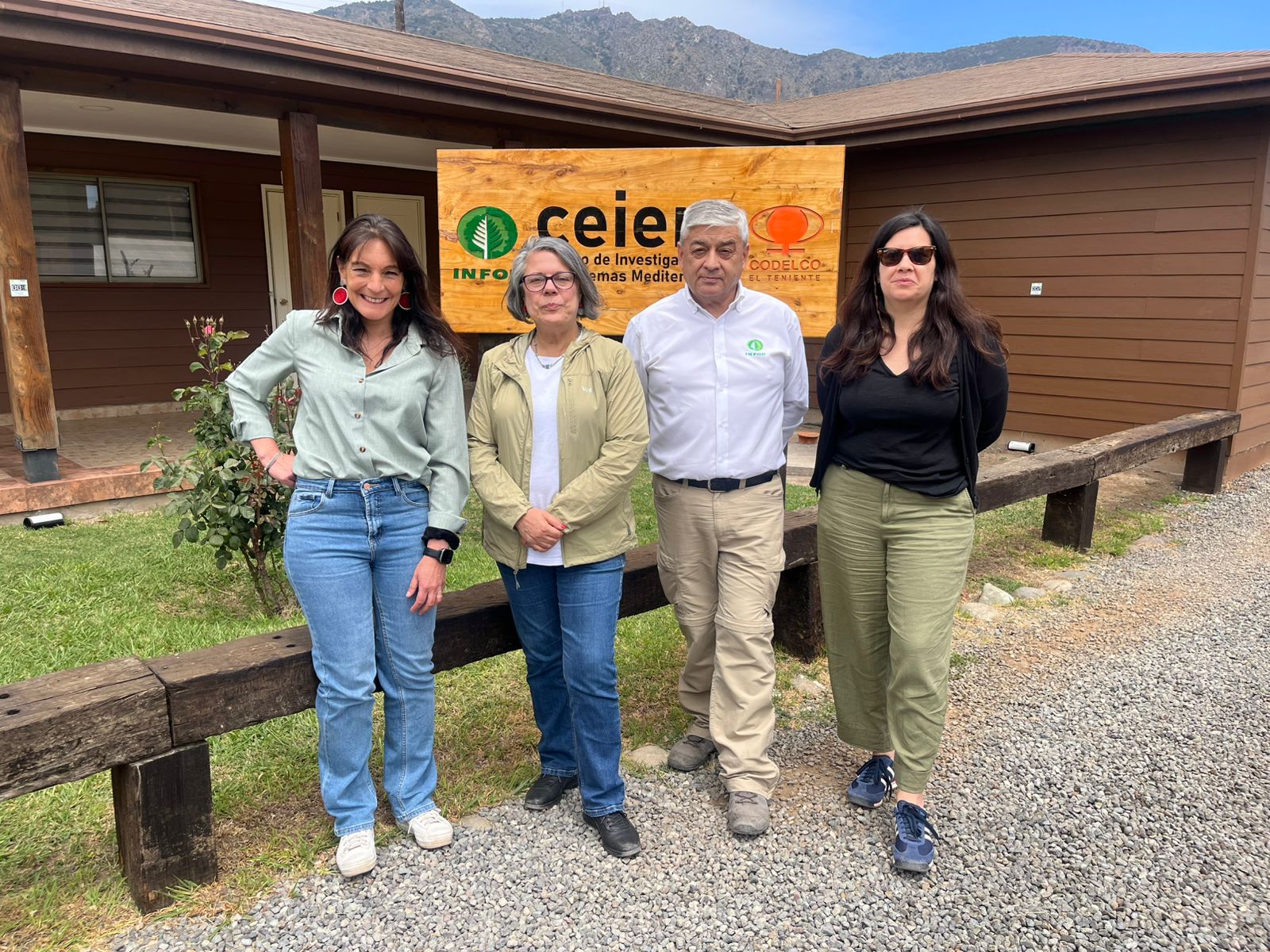
The Seremi of the Environment of the Metropolitan Region, Sonia Reyes, visited the Mediterranean Ecosystems Research Center (CEIEM), to learn about the collaborative work carried out by Codelco, El Teniente Division, and the Forestry Institute, INFOR, at Hacienda Cauquenes, in Requínoa, for the research and reproduction of forest species with conservation problems, in addition to producing various native species of the sclerophyllous forest.
Iván Quiroz, PhD in forestry sciences and director of the center, explained that CEIEM “is a contribution in terms of plant production for the reforestation and restoration processes carried out by Codelco División El Teniente. In addition, we contribute by resolving technical issues such as species that are in the conservation category and their establishment in the field.”
Seremi Sonia Reyes highlighted the contribution that the center makes to the development of biodiversity in the central part of the country. “I am impressed with the progress and results of this nursery because it is not only a production of plants, but there is also research, seed collection and special care for species that are in some conservation category. We have seen how the work of the whole year is reflected in the ability to germinate the plants and prepare them for their definitive establishment,” she said.
"We are very happy because this work is essential to recover our ecosystem and to recover and rehabilitate large areas that have been damaged or affected and that today have a hope of being reforested with the original species," added the metropolitan authority.
The manager of sustainability and external affairs at El Teniente, Germán Sandoval, said that “at Hacienda Cauquenes, the focus is on applied scientific research to improve the forestry conditions we have today and to address growing future challenges, such as water scarcity. The most important thing is that scientific knowledge is reflected in the study that INFOR is doing to project forest management into the future.”
Claudia Delard, manager of INFOR (an agency attached to the Ministry of Agriculture), said that “we are very pleased to have the visit of the Seremi of Environment of the Metropolitan Region, since the link that we can achieve with the Ministry of Environment and the Ministry of Agriculture, through our institute, strengthens ties and generates a positive synergy for the development of the communities.”
How does the center operate?
The Mediterranean Ecosystems Research Centre (CEIEM) searches for and germinates seeds in the nursery located on the farm, to then reintroduce these specimens into the territory. This work is dedicated to the production of species that are in the conservation category and others that are difficult to find on the market, such as cacti or Adiantum gertrudis, also required by the Environmental Qualification Resolution (RCA).
“We also contribute to finding solutions to technical problems. We have a greenhouse where we control environmental variables such as temperature, humidity and radiation, among others, which allow us to produce species such as the Chilean palm and cactus,” Quiroz added.
The expert highlighted that the work at Hacienda Cauquenes “has focused on species such as naranjillo, lingue, Chilean palm, canelo, cacti, ferns and others that are in the conservation category. In addition, some species of cacti and bromeliads are included.”
CEIEM IN NUMBERS:
- The reforestation plan promoted by El Teniente has been in place for 35 years
- 350,000 plants are produced in the nursery each year.
- 20 different species
- 1,310 hectares for reforestation
- 1,634 hectares for replanting
- 1,300,000 plants of various native species will be produced in the next 5 years.
- 50,000 plants produced per year to deliver to the community.
×