
Operations

40 recycling points promote recycling inside the El Teniente mine
The area management and the mining company's Circular Economy Unit are working together to change the divisional culture from within and to raise awareness of the opportunity to recycle, reuse and valorise waste and scrap.


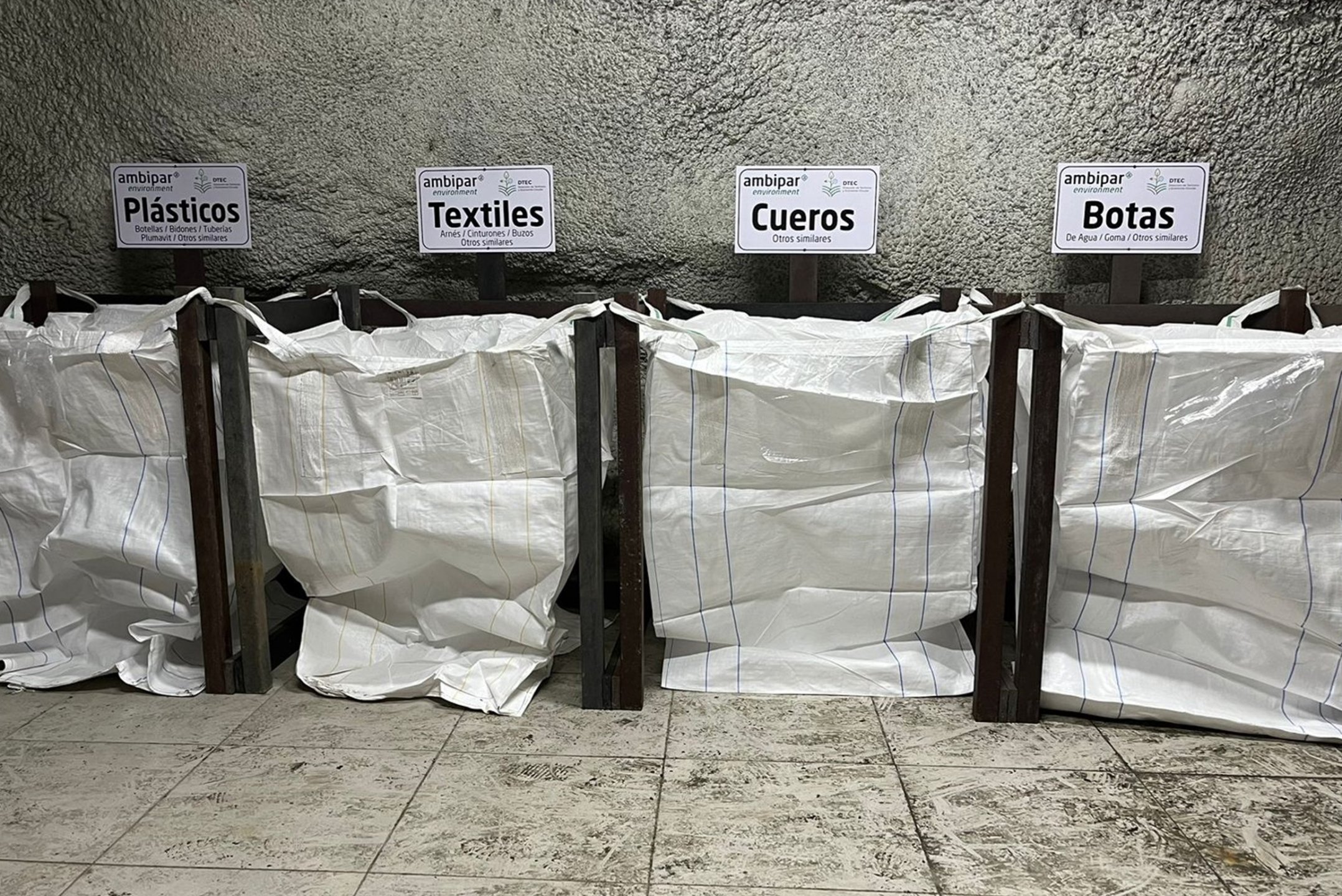
After 82 clean points were installed at surface level, the El Teniente underground mine joined the initiative and thanks to collaborative work between the area management and the Circular Economy Unit, it was agreed to equip the different sectors of the mine with 40 points, such as Teniente 6, Esmeralda, Diablo Regimiento, Pilar Norte, Sub 6, Pipa Norte and Dacita.
Mines Manager Rodrigo Andrades explained that “the strategic installation of clean points within the mine represents a tangible commitment to sustainability and the creation of environmental value. These points not only facilitate the proper separation and valorisation of materials, but also reflect the ongoing commitment to resource conservation and the promotion of a responsible work environment that is aware of the environmental impact.”
Promoting the circular economy
Periodically, the Circular Economy Unit schedules the removal of solid and organic waste from the different sectors of El Teniente. “By installing these clean points we have governance and responsibility in the removal, so that it is documented and there is traceability,” explains Eric San Martín, head of the Unit.
Bottles, cardboard, uncontaminated textiles and rubber can be deposited at these points.
“Correct segregation at source is important because it allows us to add value to it. It means that if you help me segregate the bottle, I will gather all the bottles from all the clean points and I will pack them in the CMRIS. We take that and finally we take it to a recipient who gives it a value, chops it, processes it and delivers it as raw material to produce new bottles. Correct segregation also has a value in compliance with Codelco’s values,” explains San Martín.
Transforming culture
Alejandro Morales Navia, head of the Hydraulic, Environment and Territory Unit of the Mining Department, says that “today workers visualize or see a point where they can deposit waste. This improves our culture along with capturing the value behind the waste and promoting the circular economy in the organization.”
“We are changing the culture of the Division from within. We must become aware that waste today is more than a problem, it is an opportunity. We must promote proper segregation to give value to waste,” adds Eric San Martín.
×